Source Directional Control Solenoid Valve for Flow Control Drain Regulation
Compare 30 Directional Control Solenoid Valve options from verified suppliers in China. These units support water industrial usage, featuring flange connections and direct-acting structures suitable for low-pressure flow control and drainage applications.
Key considerations
Products List


$3.28 - $10.26
MOQ: 100 Pieces


Premium Hydraulic Solenoid Manual Control Valve for Precision Directional Control
$29.90 - $39.90
MOQ: 100 Pieces


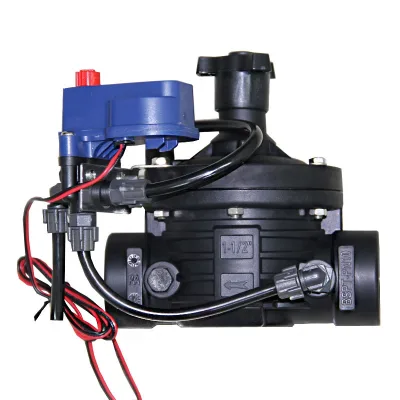


Comprehensive Sourcing Guide
Strategic Sourcing Guide for Directional Control Solenoid Valves
Understanding Technical Specifications and Actuation Mechanisms
When sourcing directional control solenoid valves, the primary objective is to align the component's mechanical and electrical characteristics with the specific demands of the hydraulic or pneumatic system. Based on available market data, the actuation mechanism for these components is predominantly electric, utilizing a DC solenoid valve configuration to manage fluid flow. This electric actuation allows for precise, rapid response times essential for automation and process control applications. The valve structure often employs a direct-action diaphragm design, which simplifies the internal mechanism by eliminating the need for a pilot valve in many low-pressure scenarios. This direct-acting type is particularly effective for applications requiring immediate opening and closing actions without the delay associated with pilot-operated systems.
The media compatibility is a critical technical parameter. The supplied product facts indicate that these valves are frequently designed for water media, suggesting a specific subset of solenoid valves optimized for liquid handling rather than pure pneumatic gas applications. However, other variations exist with pneumatic power supplies, indicating a versatility in the broader market. The body material is typically cast iron or ductile iron, providing the necessary structural integrity for industrial environments. For more corrosive or high-purity applications, the disc material may vary, with options including stainless steel (SS), brass, or bronze. The stem, which transmits the solenoid force to the valve mechanism, is often constructed from stainless steel or bronze to resist wear and corrosion.
Sealing performance is governed by the diaphragm material, which in observed listings includes combinations of Nylon with EPDM or Viton. These materials are selected based on the operating temperature and chemical resistance required. The operating temperature range is generally noted as low temperature or normal temperature, which constrains the application to environments where extreme thermal stress is not a primary factor. Pressure ratings observed in the market range from low to medium pressure, necessitating careful verification of the system's maximum operating pressure against the valve's rated capacity. The connection form is predominantly flange, which facilitates easy installation and maintenance in large-scale industrial piping systems, though thread positions for the valve rod are noted as inside gate valve configurations in specific product lines.
Compliance, Certification, and Standard Verification
Navigating the compliance landscape is essential for ensuring that sourced directional control solenoid valves meet international safety and quality benchmarks. The most frequently cited certification in the current market data is CE, indicating conformity with health, safety, and environmental protection standards for products sold within the European Economic Area. Some listings also reference ISO certification, which implies adherence to specific quality management or technical standards, though the exact ISO standard (such as ISO 9001 for quality or ISO 13849 for safety of machinery) requires explicit verification from the supplier. Relying on the generic mention of "ISO" without a specific number is insufficient for rigorous procurement; buyers must request the specific certificate number and scope.
Regarding technical standards, the observed products frequently align with DIN standards, which are German Institute for Standardization norms widely adopted in Europe and globally for industrial components. The specific standard mentioned in the context is DIN, which typically governs dimensions, pressure ratings, and testing procedures for valves. However, the exact DIN number (e.g., DIN 3841 for hydraulic valves) is not explicitly detailed in the general observations. Therefore, procurement teams must verify the specific DIN standard applicable to the valve's pressure class and connection type. Additionally, the product origin is identified as Suzhou, Jiangsu, China, a major manufacturing hub. While the location is known, the specific factory certifications and audit reports for that facility must be obtained directly from the supplier to ensure they match the claimed CE or ISO status.
Buyers should also be aware of the distinction between the product standard and the application standard. For instance, while a valve may be manufactured to a DIN standard, its integration into a safety-critical system might require compliance with ISO 13849 regarding the safety of machinery control systems. The provided data mentions ISO13849 as a background standard, but it is not confirmed as a specific attribute of every listed product. Consequently, the procurement strategy must include a verification step where the supplier confirms that the specific valve model supports the required safety integrity level (SIL) or performance level (PL) for the intended application.
Cost Drivers and Pricing Dynamics
The pricing for directional control solenoid valves is influenced by a complex interplay of material costs, manufacturing complexity, and order volume. The observed price range in the market spans from approximately 0.8 USD to 399 USD. This wide disparity reflects the diversity of the product category, ranging from small, simple solenoid valves for light-duty applications to larger, robust units designed for heavy industrial use. The lower end of the price spectrum likely corresponds to basic models with standard materials like cast iron bodies and simple diaphragm seals, while the higher end encompasses valves with specialized materials such as stainless steel components, Viton diaphragms, or custom configurations.
A significant cost driver is the customization level. The market data indicates that customization is available, which inherently increases the unit price due to the setup costs and reduced economies of scale. Customizations may include specific port sizes (ranging from M5 to 1/2"), unique coating requirements (such as the observed 300-micron coating), or tailored electrical connections. The Minimum Order Quantity (MOQ) also plays a crucial role in the final landed cost. The observed MOQ ranges from 1 to 1000 units. For buyers requiring small batches, the per-unit cost will be significantly higher due to the lack of volume discounts. Conversely, large-volume orders can leverage the lower end of the price range, provided the supplier has the capacity to handle the volume without compromising quality.
Other factors influencing cost include the power supply type and the complexity of the valve structure. DC solenoid valves may have different pricing compared to those requiring specific voltage configurations or AC power. Furthermore, the inclusion of additional features such as specific spring materials (e.g., SUS304) or specialized packing (such as bubble bags and wooden cases for heavy items) adds to the overall cost. Buyers must balance the initial purchase price against the total cost of ownership, considering factors like maintenance frequency, replacement part availability, and the potential for system downtime if a lower-quality, cheaper valve fails prematurely.
Typical Applications and Operational Context
Directional control solenoid valves serve a critical role in various industrial sectors, primarily where precise flow control is required. The observed applications include general industrial usage and specific water industrial usage, highlighting their importance in fluid management systems. The functional capabilities of these valves extend to flow control, drainage, emptying, and regulation, making them versatile components in processing plants, water treatment facilities, and hydraulic systems. The specific mention of "GM Excavator" and "Special Excavator" in the product attributes suggests that similar valve technologies are adapted for heavy machinery, although the specific directional control solenoid valves discussed here are primarily noted for water and industrial fluid applications.
The operational context often involves hydraulic transmission systems, where the valve directs the flow of hydraulic fluid to control actuators. The drive type for the associated machinery is often internal combustion, but the valve itself is electrically actuated. This distinction is vital for system design, as the electrical control system must be isolated from the high-vibration and high-temperature environment of the engine compartment. The valves are typically used in new condition equipment, implying they are integral to the initial assembly or major overhaul of industrial machinery.
The size of the valves, ranging from DN50 to DN300, indicates their suitability for medium to large-scale piping systems. This size range is common in municipal water systems, irrigation networks, and industrial processing lines where high flow rates are necessary. The port sizes, which can vary from M5 to 1/2", allow for integration into various control circuits, from small pilot lines to main supply lines. The usage scenarios also include "Drain" and "Emptying," suggesting that these valves are often employed in systems that require periodic flushing or the removal of fluids from tanks and pipelines. Understanding these application nuances helps buyers select the correct valve type, ensuring that the selected component can handle the specific flow dynamics and pressure requirements of the system.
Supplier Evaluation and Quality Assurance Protocols
Evaluating suppliers for directional control solenoid valves requires a rigorous approach that goes beyond simple price comparison. Given the observed origin in Suzhou, Jiangsu, buyers should prioritize suppliers who can provide transparent documentation regarding their manufacturing processes and quality control measures. The availability of customization suggests that the supplier has flexible production capabilities, but this flexibility must be balanced with consistent quality. Buyers should request detailed technical datasheets that confirm the material composition, such as the specific grade of stainless steel or the exact durometer of the EPDM/Viton diaphragm.
Quality control should be a central part of the supplier evaluation. The observed coating thickness of 300 microns is a specific process parameter that indicates a commitment to corrosion protection. Buyers should verify if this coating process is standardized across all production batches or if it varies based on order size. Additionally, the condition of the product is listed as "New," which is a basic requirement, but buyers should also inquire about the storage conditions and shelf life of the components to ensure they have not degraded prior to delivery.
The certification status is another critical evaluation point. While CE is a common certification, buyers must verify the validity of the certificate and the scope of the assessment. For ISO certifications, the specific standard must be confirmed. Suppliers should be able to provide third-party audit reports or test results that validate their claims. The presence of specific model numbers, such as F8060 or F8050, allows for traceability. Buyers should ensure that the supplier can provide a consistent supply of these specific models or their equivalents, as part numbers can change or become obsolete.
Furthermore, the packaging method, such as bubble bags and wooden cases, indicates the supplier's attention to protecting the product during transit. For heavy or precision components, improper packaging can lead to damage that compromises performance. Buyers should evaluate the supplier's logistics capabilities to ensure that the packaging is robust enough to withstand international shipping, especially if the product is being sourced from China. The ability to provide a clear bill of materials and a detailed packing list is also a sign of a professional supplier.
Long-Term Procurement and Lifecycle Management
Sourcing directional control solenoid valves is not merely a transactional activity but a strategic decision that impacts long-term operational efficiency. The availability of spare parts and the longevity of the components are key considerations. The materials used, such as cast iron bodies and stainless steel stems, suggest a design intended for durability, but the actual lifespan depends heavily on the operating environment. Buyers should assess the expected service life of the valves under their specific operating conditions, including temperature and pressure cycles.
Maintenance and replacement strategies should be developed early in the procurement process. The modular nature of the diaphragm and spring components allows for potential repair rather than full replacement, which can reduce long-term costs. However, this depends on the availability of replacement parts from the supplier. Buyers should negotiate terms that include a commitment to supply spare parts for a defined period, typically 5 to 10 years, to ensure the longevity of the installed base.
The customization aspect also has long-term implications. While custom valves offer a perfect fit for specific applications, they may be harder to replace if the supplier discontinues the model. Buyers should consider the standardization of components where possible to maintain flexibility in the supply chain. Additionally, the lead time for custom orders should be factored into the procurement planning to avoid production delays.
Finally, the total cost of ownership should be calculated, including energy consumption, maintenance labor, and the cost of downtime. Electric solenoid valves are generally energy-efficient, but the power supply requirements (DC vs. AC) and the efficiency of the coil design can impact operating costs. By focusing on high-quality, certified components from reputable suppliers, buyers can minimize the risk of premature failure and ensure a stable, efficient operation of their industrial systems over the long term.
FAQs
What actuation type is used for directional control solenoid valves?
These valves primarily use electric actuation with DC solenoid configurations. This mechanism enables rapid response times suitable for automation, though some variations exist with pneumatic power supplies for specific industrial needs.
Which materials are commonly used for the valve body and disc?
The valve body is typically made of cast iron or ductile iron for structural integrity. Disc materials often include stainless steel, brass, or bronze to resist corrosion and ensure durability in various fluid environments.
Can these valves be customized for specific industrial applications?
Yes, customization is available to meet specific industrial requirements. Buyers can request tailored configurations such as unique port sizes, specific coating thicknesses, or specialized packing methods like wooden cases for heavy-duty transport.
What certifications do directional control solenoid valves typically hold?
Most products carry CE certification indicating compliance with European safety standards. Some listings also reference ISO certification, though buyers must verify the specific standard number and scope directly with the supplier for rigorous procurement.
How does the price range vary for these valves?
The observed price range spans from 0.8 to 399 USD depending on specifications. Lower costs apply to basic models with standard materials, while higher prices reflect specialized components, customizations, or larger sizes like DN50 to DN300.
What is the typical minimum order quantity for these valves?
The minimum order quantity ranges from 1 to 1000 units based on supplier policies. Smaller batches may incur higher per-unit costs, whereas large-volume orders can leverage lower pricing tiers if the supplier has sufficient production capacity.